In a country with multiple professional sports leagues with hundreds of millions of dedicated followers, the National Football League remains the most popular – bringing in an average of 16.5 million people watching a typical game throughout the 17 week season. While most of its massive audience watches on television or through online streaming, the NFL also has some of the largest, most expensive stadiums where fans can watch the game unfold live. With 32 teams playing in 31 different stadiums, each stadium has an average capacity of 70,653 with the largest being the Los Angeles Memorial Coliseum – home of the Los Angeles Rams – with a maximum capacity of 93,607.
Having some of the largest stadiums in the United States also means they are some of the most expensive. There are a few stadiums that don’t apply such as Lambeau Field in Green Bay, Soldier Field in Chicago and the Los Angeles Coliseum in L.A. which all originally opened over 50 years ago and each cost less than a million dollars to build. Compared to the older stadiums, stadiums that have been built after 2000, can cost anywhere up to a billion dollars with MetLife Stadium – home to both the New York Giants and New York Jets – cost a whopping 1.6 billion dollars to build before opening in 2010. How do they pay for these incredibly expensive stadiums? As the Taxpayers Protection Alliance points out, 29 of the 31 NFL stadiums have been receiving public funding from taxpayers for construction and renovation since 1995, while the NFL just shed its non-profit label and its tax-exempt status in 2015.
This leads to the argument of whether or not receiving public funding for constructing and renovating NFL stadiums is good or bad business. Out of the 29 stadiums built with taxpayer money, I will focus on four: Lincoln Financial Field in Philadelphia, Pennsylvania, Heinz Field in Pittsburgh, Pennsylvania, Paul Brown Stadium in Cincinnati, Ohio, and Edward Jones Dome in St. Louis, Missouri, and examine their financial impact on the community whose taxpayers were forced to pay for them.
Lincoln Financial Field – Philadelphia, PA
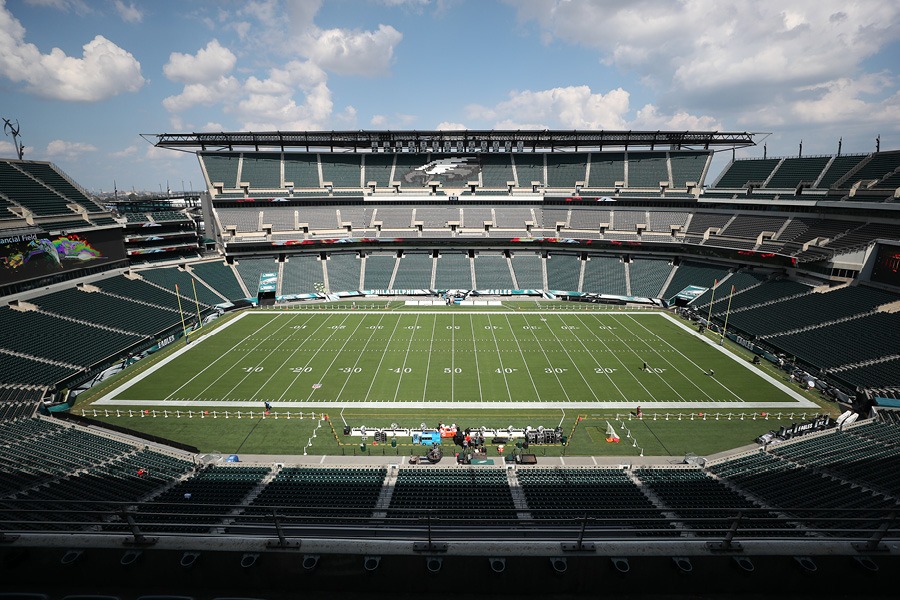
Built in 2003, Lincoln Financial Field serves as the home to the NFL’s Philadelphia Eagles and is also used as the home field for Temple University football. In total, the 67,000 seat stadium built in the Philadelphia Sports Complex on Pattison Avenue cost $512 million to erect. Of that $512 million, $188 million came out of the pockets of the people of Philadelphia area. For comparison, the city of Philadelphia asked for $500 million from its taxpayers in 2015 to build over 1,200 housing units in the Sharswood-Blumberg community. The largest housing project in Philadelphia history is still undergoing a multi-phase construction and when it is finished it is projected to provide housing tens of thousands of poverty-stricken people in North Philadelphia.
When ground was broken to construct Lincoln Financial Field in June 2001, the unemployment rate of the Philadelphia area was at 6.2 percent, while the median household income was $41,087. By the time the stadium was opened in August of 2003, the unemployment rate had increased to 7.7 percent, while the median household income decreased to $36,918. The people of Philadelphia, along with the rest of the country, continued to struggle through economic crash of 2008 with the unemployment rate hitting its peak at 12 percent in July 2012. At this time, renovations of the stadium were taking place; these renovations added an additional 1,600 seats, enlarging the stadium store, as well as adding multiple video boards around the stadium. All together, the $125 million of renovations to the now 14-year-old stadium brought the total cost of the stadium to $637 million. Since the renovations that finished in 2014, things have stabilized financially for Philadelphians with the unemployment rate sitting at 6.7 percent as of last month, while median household income was found to be $41,223 according to a 2015 study.
Serving as the home to the Eagles since its opening in 2003, the stadium has seen tremendous attendance from the large Eagles fanbase. To see the Eagles play live, fans will have to dish out an average of $106 – an increase of $7 from last season.
Heinz Field – Pittsburgh, PA
5 hours west of Lincoln Financial Field, sits Heinz Field – home to the Steelers. The stadium sits adjacent to where the Ohio, Allegheny, and Monongahela Rivers meet in Pittsburgh, Pennsylvania. Opened in 2001 after two years of construction, the stadium originally could hold up to 65,050 people, but after renovations in 2012, the stadium can now seat 68,400. The stadium which is used as the home stadium for the Pittsburgh Steelers and the University of Pittsburgh football team, and recently has been used as the venue for two Pittsburgh Penguins ice hockey games, cost $357 million to construct. Of that $357 million, the Steelers brass put up just $76 million, leaving taxpayers on the hook for $281 million. The owners then received $70 million from Heinz to name the stadium which they kept for themselves. The funding for Heinz Field was a part of a larger public project which also included the construction of a baseball stadium for the Pittsburgh Pirates and tripling the size of the David L. Lawrence Convention Center. In total, the entire project cost taxpayers $809 million.
For comparison, the taxpayers of Pittsburgh will have to pay out $1.65 billion over the next 25 years – $67 million per year – for a massive ethane cracker plant that is under construction in Beaver County, Pennsylvania. The ethane cracker plant will produce massive amounts of ethylene which is used in making plastic and over 90 percent of manufactured materials. When the plant is finished construction, the site will also provide over 6,000 construction jobs and will employ over 600 workers permanently.
When construction began in the summer of 1999, the unemployment rate of Pittsburgh citizens sat at 4.5 percent with median household income just above $39,000. When the stadium was opened in August 2001, had increased slightly to 4.9 percent while the average household income bumped up to $40,799. For the next four years, the unemployment rate rose; hovering between 5 and 6 percent before dropping back under 5 percent in 2005 where it stayed until the economic crash of 2008. From April 2008 until November 2013, the unemployment rate stayed above 5 percent with the peak coming in February 2010 when 9.5 percent of Allegheny County residents were without a job. In 2015, Heinz Field underwent $35 million of renovations which added 2,600 seats along with a new suite level plaza in the South End of the stadium.
Since its opening in 2001, Heinz Field has sold out every Steelers home game with the average price of admission averaging $203 in 2017 – the highest ticket cost since Heinz Field opened.
Paul Brown Stadium – Cincinnati, OH
Another 5 hours southwest of Heinz Field, Paul Brown Stadium has served as the home of the NFL’s Cincinnati Bengals since 2000. The 65,535 seat stadium cost Hamilton County – where Cincinnati is located – $455 million to construct and will another $258 million to pay off the interest on the loans used to finance the stadium’s construction. Since 2000, the deal to build and operate Paul Brown Stadium has cost Hamilton County taxpayers over $920 million dollars and that number is only going to increase.
With eight more years left on the 26-year lease which will end in 2026, taxpayers will now have to pay for gamely operating expenses which will add another $2.7 million in 2017 and is expected to continue to rise. Since 2015, Paul Brown Stadium has also received $25 million from the county to install a new scoreboard and make the stadium energy-efficient. To go along with that, the stadium also receives another million dollars from taxpayers each year for stadium improvements.
At this rate, by the time the lease ends, it is projected that Hamilton County taxpayers will have spent over $1.1 billion dollars to build and maintain Paul Brown stadium to keep the Bengals – who threatened to leave the city in the mid-90s – in Cincinnati. The cost of the stadium was so great that the city twas forced to sell off a local hospital. While many of their tax dollars were going into paying for Paul Brown Stadium, the Cincinnati area saw a huge spike in unemployment rate – experiencing a continual rise from 3.9 percent in 2000 to 11.1 percent in January 2010 before dropping off in recent years.
The cost of Paul Brown Stadium greatly overshadows another public project in Cincinnati: restoring the Union Terminal – a feat where taxpayers will be on the hook for $151.7 million of the $212.7 million project. The project will be funded using a five-year half-percent sales tax hike that will expire in 2019 unlike Paul Brown Stadium which has required funding for almost 18 years and will continue through 2026.
Edward Jones Dome – St. Louis, MO
Unlike all the other stadiums I have discussed, Edward Jones Dome in St. Louis is no longer home to any NFL team. From its opening in 1995 until 2016, the dome-style stadium was home to the St. Louis Rams who left the city to return to Los Angeles where the franchise played from 1946 until 1994. Now, not only has St. Louis lost the Rams, but they still have to finish paying off the remaining $100 million in bonds that were used to construct the $280 million stadium that coaxed the Rams to St. Louis in the first place; a feat that likely won’t be completed until 2021.
Since the Edward Jones Dome was built in 1995, the city of St. Louis has seen its unemployment rate undergo big changes. In 1995, unemployment rate was 4.5 and over the next five years, dropped to 3.2 percent. Succeeding the drop, the unemployment rate nearly doubled over the next five years – peaking at 6.2 percent in August 2004. Like many other cities, St. Louis’ unemployment rate skyrocketed during the economic crash – reaching 10.4 percent in October 2009.
To compare the cost of the stadium, Missouri taxpayers pay a combined $70 million for five of the region’s cultural institutions: The St. Louis Zoo and St. Louis Art Museum receive $20 million a year. The Missouri Botanical Garden, Missouri History Museum and St. Louis Science Center each receive about $10 million annually.
A One-sided Deal
This leaves the question: should taxpayers continue to pay for NFL stadiums? In my opinion, absolutely not. The main reason being that a stadium which will hold at most 11 home games in a season just simply isn’t worth the hundreds of millions of taxpayer dollars that are shelling out. The NFL simply doesn’t give back to their community; the NFL team must pay a modest rent to the city; for example, when the Rams were in St. Louis paid just $500,000 annually for the land the stadium was built on. Now, with the Rams in Los Angeles and St. Louis with $100 million of debt in the Rams’ former stadium, there has still been no assistance from Rams’ owner Stan Kroenke – who has a net worth of $8.1 billion – to help the city pay off their debt. The lack of NFL owners paying back their city is also shown by the Rooney family – owners of the Steelers – keeping the $75 million Heinz paid them for naming rights of their stadium instead of giving it back to the city that gave $281 million for the construction of Heinz Field.
Another example of a lack of gratitude for their city is Seahawks’ owner Paul Allen who pays just $1 million annually to the state of Washington after state taxpayers paid for $390 million of the Seattle Seahawks $560 million CenturyLink Field. After having the stadium paid for to go along with hundreds of millions of revenue from fans by way of tickets, concessions, and parking, to only give back a million dollars back to the city is purely unacceptable.
As for the taxpayers of Hamilton County, they are perhaps the biggest victims of the NFL’s ability to use taxpayer money to build their stadiums. Not only have they put $455 million towards constructing Paul Brown Stadium in the first place, but they also must pay off the interest from the loans used to fund the stadium – another $258 million. On top of all that, they will soon have to pay for game-day operations and possibly even clean-up of the stadiums after each game.
After much research on the funding of NFL stadiums, I believe it’s easy to see why the use of public money to fund NFL stadiums is bad business for everyone but the NFL who are looking to make the biggest profit they can and using public funding to build massive stadiums while the NFL and their team owners make all the profits, maximizes their income. The revenue teams make will usually go towards the government, while taxpayers that are giving hundreds of millions of dollars to the 29 NFL stadiums that use public funding and taxpayers get only a small portion of the team’s revenue in return. It’s a deal that taxpayers will always get the short end of the stick.
With the NFL being as successful as they are, taking advantage of its fans to fund their stadiums where the league will collect all the revenue generated by the fans. It’s an obviously unfair deal that the fans never agreed to in the first place.
Featured Image courtesy of Philadelphia Eagles
References
Beyer, Scott. “Philadelphia To Seize 1,330 Properties For Public Redevelopment.” Forbes. June 26, 2015. Accessed October 01, 2017. https://www.forbes.com/sites/scottbeyer/2015/06/26/philadelphia-to-seize-1330-properties-for-government-redevelopment/2/#1cdeb16f7339.
Gregory, Sean. “NFL Gives Up Tax-Exempt Status.” Time. Accessed September 23, 2017. http://time.com/3839164/nfl-tax-exempt-status/.
Harvey, Coley. “Paul Brown Stadium upgrades coming soon.” ESPN. April 17, 2014. Accessed October 02, 2017. http://www.espn.com/blog/cincinnati-bengals/post/_/id/7009/bengals-paul-brown-stadium-upgrades-cincinnati-hamilton-ohio.
Hunn, David. “St. Louis Zoo says it needs money; will you pay more?” Stltoday.com. August 28, 2015. Accessed October 02, 2017. http://www.stltoday.com/news/local/metro/st-louis-zoo-says-it-needs-money-will-you-pay/article_02fae734-dd5c-5611-9802-67ecf669ba9a.html.
“Los Angeles Memorial Coliseum Commission History.” Los Angeles Memorial Coliseum Commission. Accessed October 01, 2017. http://lamcc.lacounty.gov/History.
May, Lucy. “Union Terminal restoration to cost about $900,000 more than originally expected.” WCPO. September 13, 2016. Accessed October 03, 2017. http://www.wcpo.com/news/insider/union-terminal-restoration-to-cost-about-900000-more-than-originally-expected?page=2.
Panyard, Jim. “$1 Billion And Counting For State’s Taxpayer-Funded Stadiums.” Watchdog.org. September 17, 2010. Accessed September 27, 2017. https://www.watchdog.org/pennsylvania/billion-and-counting-for-state-s-taxpayer-funded-stadiums/article_d5f040af-fd5e-5272-8a5b-aac4b41f1dd4.html.
Seitz, Amanda. “County has spent $920M in deal to build stadium, keep NFL team in town since 2000.” WCPO. January 21, 2016. Accessed September 27, 2017. http://www.wcpo.com/news/insider/county-has-spent-920m-in-deal-to-build-stadium-keep-nfl-team-in-town-since-2000.
“Stadium Facts.” Lincoln Financial Field. Accessed October 03, 2017. http://www.lincolnfinancialfield.com/stadium-facts/.
“Unemployment Rate in Hamilton County, OH.” FRED. September 27, 2017. Accessed October 04, 2017. https://fred.stlouisfed.org/series/OHHAMI1URN.
“Unemployment Rate in Philadelphia County/City, PA.” FRED. September 27, 2017. Accessed October 04, 2017. https://fred.stlouisfed.org/series/PAPHIL5URN.
“Unemployment Rate in Pittsburgh, PA (MSA).” FRED. September 27, 2017. Accessed October 01, 2017. https://fred.stlouisfed.org/series/PITT342URN.
“Unemployment Rate in St. Louis, MO-IL (MSA).” FRED. September 27, 2017. Accessed October 02, 2017. https://fred.stlouisfed.org/series/STLUR
Waldron, Travis. “St. Louis Taxpayers Aren’t Finished Paying For The Stadium The Rams Abandoned.” The Huffington Post. April 05, 2017. Accessed October 04, 2017. https://www.huffingtonpost.com/entry/rams-los-angeles-st-louis-taxpayers_us_5696955ee4b0778f46f7c330.
“What’s An Ethane Cracker?” NPR. Accessed September 29, 2017. https://stateimpact.npr.org/pennsylvania/tag/ethane-cracker/.
Williams, David. “NFL Subsidies: Taxpayers Left High and Dry After Rams Move to Los Angeles.” Taxpayers Protection Alliance. January 26, 2016. Accessed October 04, 2017. https://www.protectingtaxpayers.org/blog/a/view/nfl-subsidies-taxpayers-left-high-and-dry-after-rams-move-to-los-angeles.